
Sell shipping containers
Storage boxes, converted units, wind and watertight or long past it. Tell us the size and the state of the doors and floor, and we will tell you what it is worth to us.
Why containers are different
A box is easier to move than a cabin
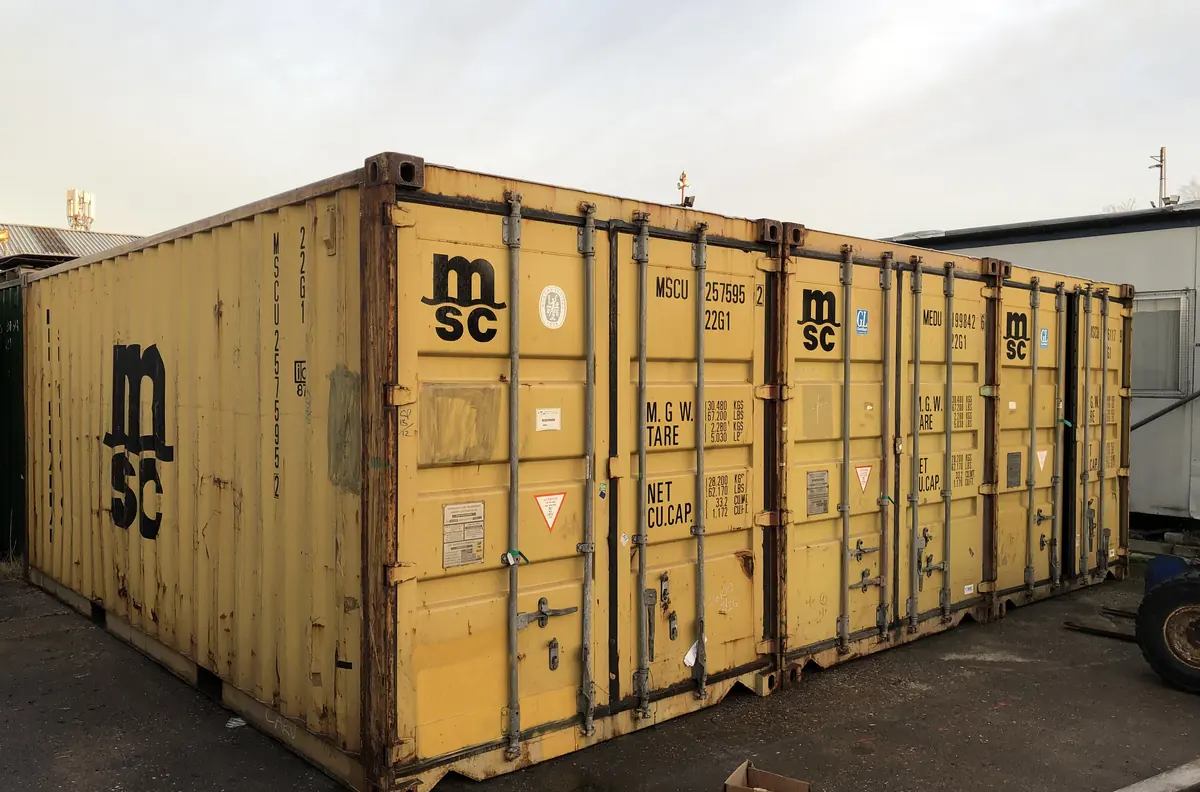
Containers were designed to be picked up. Corner castings, known dimensions, a predictable weight and a frame that expects to carry the load through its corners — all of which makes collection simpler than lifting a cabin that was assembled on a chassis and has spent five years settling into soft ground.
That ease of handling is part of what makes them worth buying. It also means the questions we ask are shorter. With a cabin we want to know about the roof, the insulation, the electrics and the fit-out. With a container we mostly want to know whether the doors work and what the floor is like.
Sizes and grades
What we buy, and what changes the figure
Sizes first, because it determines how the collection is planned. Then condition, which determines almost everything else.
| Size | Typically used for | Collection notes |
|---|---|---|
| 8ft and 10ft | Small site stores, tool stores, allotment and garden storage | Easiest to handle, fits into tight yards and domestic driveways |
| 20ft | General storage, site secure stores, workshops | The most common size we collect and the most straightforward |
| 24ft | Where a 20ft is not quite enough but a 40ft is too much | Usually a shortened 40ft; we check the cut and the framing before pricing |
| 32ft | Where a 40ft will not fit the space but a 20ft is too small | Usually a shortened 40ft; we check the cut and the framing before pricing |
| 40ft | Bulk storage, agricultural use, larger conversions | Needs more room to lift and turn; access matters more than weight |
| High cube | Anything needing headroom, racking or conversion | Extra foot of height affects travel height on the lorry |
| Converted units | Offices, workshops, welfare, drying stores | Priced individually — the quality of the cutting and framing is the issue |
If you do not know the size, measure the outside length along the side rail. Containers come in standard lengths, so a rough tape measurement is enough to identify one.
Condition
Wind and watertight, or something less
Wind and watertight
Doors seal, roof sheds water, no daylight through the panels. This is the grade with the broadest resale market because it will do the job most buyers want, which is keeping things dry.
Watertight but tired
Heavy surface rust, dented panels, previous repairs, faded to no particular colour. Cosmetically poor and functionally fine. Still very much worth buying and priced accordingly.
Leaking
Holes in the roof, corroded seams, perished door seals. Buyable in most cases, because plenty of uses tolerate a leak and repairs are possible, but the figure reflects the work involved.
Doors seized or damaged
The most significant single fault. Hinges, cams and locking bars are repairable but awkward, and a container that will not open properly has lost its primary function until it is fixed.
Floor gone
Marine ply that has been sitting wet, spongy under weight, or lifted and never replaced. It is a real cost to put right and it is one of the things we specifically ask to see photographed.
Structurally damaged
Twisted frame, crushed corner casting, a rack that leans. This is where we usually stop, because a box that cannot be lifted or stacked safely is not something we will put on a lorry.
Full detail on where the line sits is on the what we buy page. Buying rather than selling? See used shipping containers for sale.
Getting it collected
What the lorry needs from your end
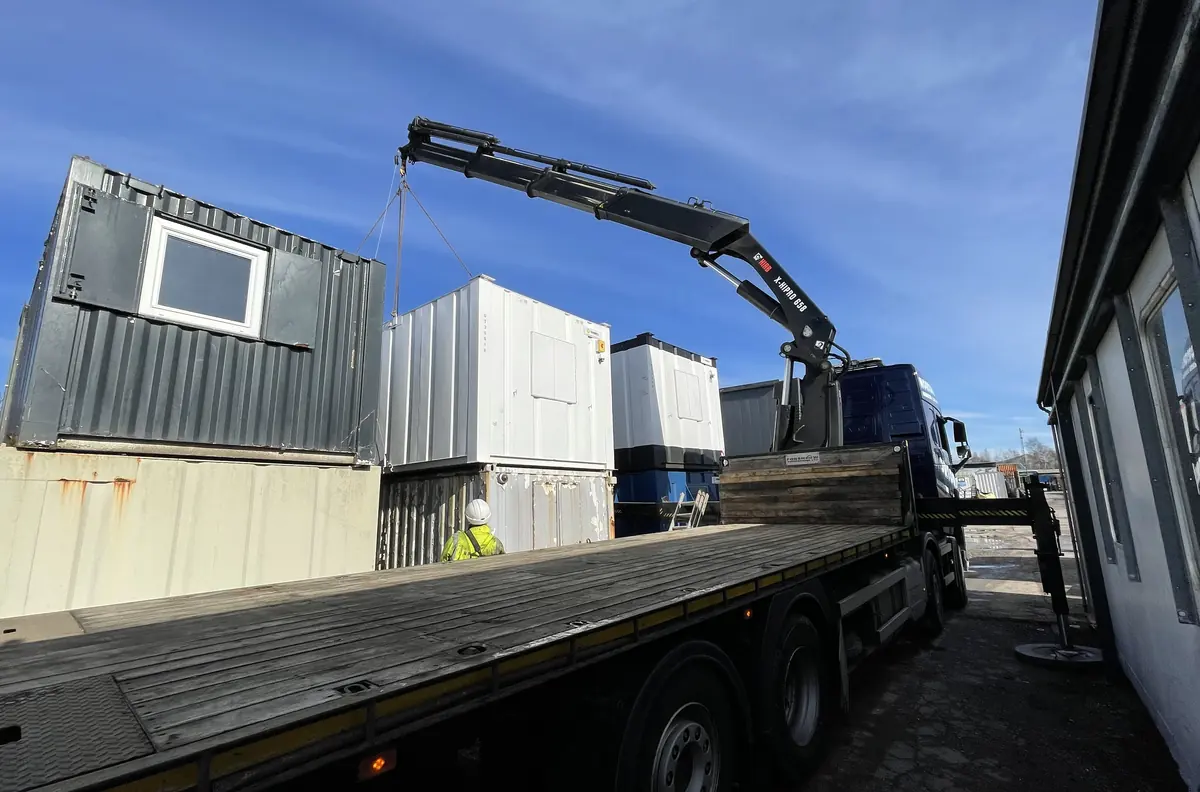
Access is the whole conversation. A Hiab lifts from the side, so the lorry needs to park roughly alongside the container with the crane able to reach both ends. Overhead cables, low branches, a narrow gateway or a container wedged behind other stock will all change how the job is done, and occasionally whether it can be done at all.
Ground matters as much as space. A loaded lorry with outriggers down puts serious point loads into the surface. Hardstanding is ideal, compacted stone is fine, and a wet field in February is a conversation we would rather have before the driver sets off than after he arrives.
Tell us what is around the container when you send photographs. One picture taken from where the lorry would stand is worth more than a description.
Questions about selling containers
I have unwanted shipping containers taking up space. Will you take them?
That is a large part of what we do. Unwanted containers sitting in a yard cost you the ground they stand on and nothing else, so they tend to get left until somebody needs the space. Send photographs, the sizes and a postcode. Several in one place is better than one, because the lorry is already there and already set up. We will tell you what each is worth and price the haulage separately.
Do you buy containers that are not wind and watertight?
Frequently. A container with a hole in the roof or a rusted-through panel still has a sound frame and a resale life as storage where weatherproofing is not critical. It is worth less than a watertight box and we will say so, but leaking is not the same as finished. Rotten floor plus a twisted frame is closer to finished.
What condition matters most on a container?
The doors and the floor, in that order. Doors that will not swing, seal or lock make a container close to useless for its main purpose, and hinge and locking gear repairs are fiddly. Under the doors, the floor tells you whether water has been sitting inside. Surface rust on the panels matters far less than either.
Will you buy converted containers?
Yes, though conversions are harder to price from photographs than plain boxes. Insulated stores, workshops with windows and personnel doors, and container offices all sell on. What we need to see is how the cutting was done and whether the openings were properly framed, because a badly cut container loses structural strength.
Are containers easier to move than cabins?
Generally yes. They are built to be lifted, stacked and shipped, the corner castings are designed for it, and a standard box has known dimensions and weight. That usually makes collection more straightforward than a cabin of similar size, provided the lorry can get within reach on ground that will carry it.
People search for "we buy any container" — do you really buy any?
No, and neither does anyone else being straight with you. We buy most of them. What we turn down are boxes that cannot be lifted safely, containers with structural damage that makes them unstable, and anything with a contamination or hazardous residue history we cannot verify. Condition and history decide, every time.
Do you buy single containers or only multiples?
Both. A single 20ft box in a yard is a normal job for us and so is a run of thirty coming off a depot. With multiples, send a list and mark which are watertight, which leak and which are converted, because the mix changes the figure more than the total number does.
Got a container to move on?
Send a photograph of each end, one of the doors open and one of the floor. Tell us the postcode and where a lorry could stand. We will come back with a figure.