
Cabin disposal
What happens to a unit that is past refurbishing. Broken down properly, materials separated, paperwork available — rather than dragged to the back of the yard for another five years.
The honest bit
Some cabins are finished, and pretending otherwise costs you money
We buy a lot of units. We do not buy all of them, and a page that claimed we did would be lying to you.
A cabin that has stood open to the weather for a decade with a hole in the roof is not a bargain waiting for a buyer. The deck has gone soft, the insulation is saturated, the frame is corroding from the inside and the electrics are scrap. Refurbishing it would cost more than the finished unit is worth, so nobody sensible is going to.
What you have at that point is not an asset, it is a liability sitting on ground you could be using. The useful question is no longer what is it worth but what does it cost to be rid of it properly.
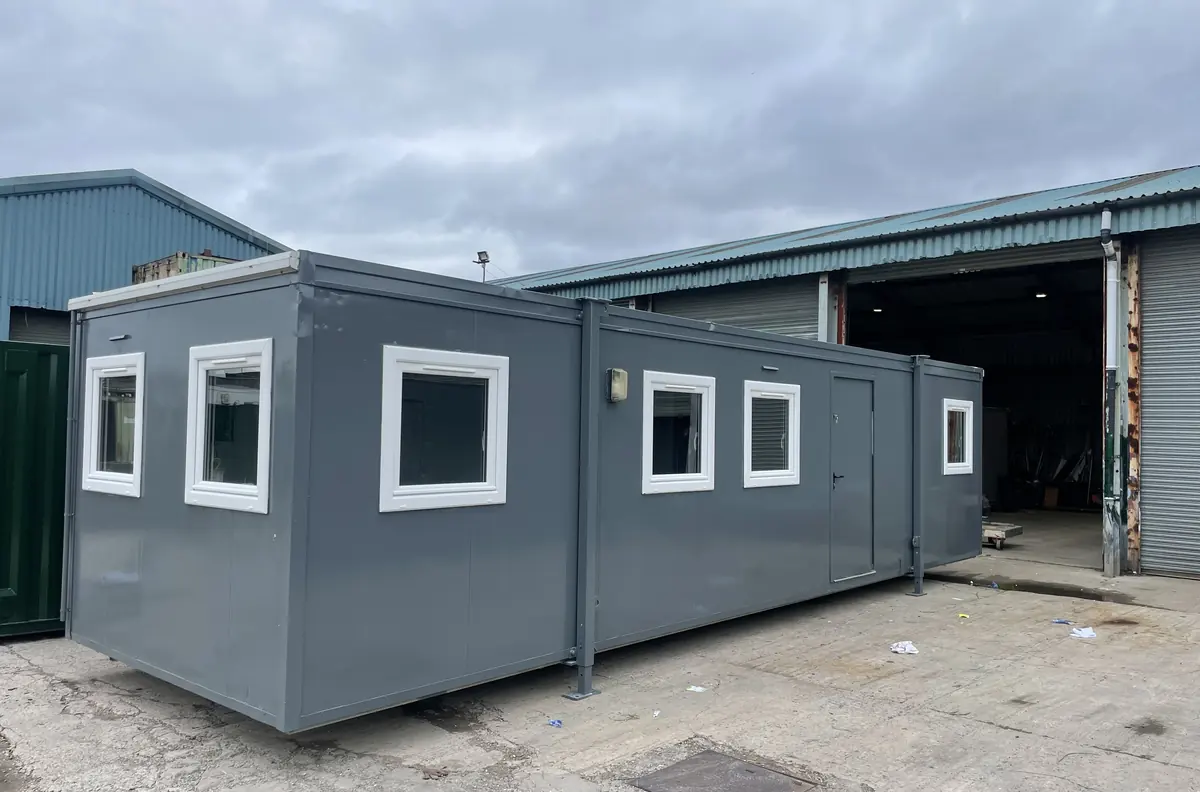
That is what this page is about. If you are not certain which side of the line your unit falls on, send photographs before you assume the worst — tired and finished are different things, and we would rather buy it than break it.
Money
Why purchase pays and disposal costs
| A unit we buy | A unit we dispose of | |
|---|---|---|
| Where it ends up | Back out of our yard to another buyer, refurbished if needed | Broken down into material streams and processed |
| Who covers the transport | The eventual sale does | Nothing downstream does, so the job does |
| Labour after collection | Clean, repair, repaint, test | Strip out, separate, sort, weigh in, tip the residue |
| Waste cost | Minimal — offcuts and packaging | Real, and charged by weight at a licensed facility |
| Direction of the money | We pay you | You pay us |
Between those two sits a third case: a unit worth almost nothing, where the value of the recovered steel roughly cancels the cost of the job. Those come out close to a nil-cost collection and we will tell you when yours is one.
Materials
What a cabin turns into once it is broken down
A portable cabin is not one material, it is six or seven bolted together. Tipping it whole is the lazy answer and increasingly not an acceptable one.
Steel
Chassis, frame, corner posts, cladding, doors and shutters. The largest single component by weight and the one with genuine recovery value. It goes to metal recycling and it is the reason some disposals cost less than people expect.
Boards and linings
Floor decks, joists, internal linings and plasterboard. Sound board can sometimes be recovered; water-damaged deck and gypsum board cannot, and plasterboard has its own disposal route that it must not be mixed out of.
Insulation
Mineral wool, polystyrene or rigid foam depending on the age of the unit. Bulky, light and awkward, and once it is saturated it is a waste stream rather than a recoverable material.
Electrical items
Consumer units, cable, light fittings, heaters, water heaters and any appliances left behind. These come out separately and go through the electrical waste route rather than into a mixed skip.
Glazing and plastics
Windows, uPVC frames, roof lights, guttering and downpipes. Glass is separated from the frame. Sanitaryware from toilet blocks goes with the hardcore-type fraction.
Residue
Sealants, mastic, floor coverings, adhesives and general mixed waste. Small in volume once everything else is out, and the part that actually goes to a licensed disposal facility.
Site clearance
When it is more than one cabin
-
Tell us what is standing
Offices, welfare, drying rooms, toilet blocks, stores and containers. A photograph from each corner of the compound tells us more than a written list does.
-
We split it into buy and dispose
Rarely is a compound all one or all the other. We price each unit for what it actually is, and the two figures net off against each other in your favour.
-
Order of removal gets planned
The last unit out still needs a route to the gate. On tight compounds this dictates everything, and getting it wrong means a second visit that somebody has to pay for.
-
Disconnections happen before we attend
Power, water and drainage are yours to isolate. See the removal page for exactly what has to be done beforehand.
-
Units come off on our own lorries
Loaded, strapped and hauled by our own drivers. That is why we can hold a date across a multi-day clearance rather than working round a third party's diary.
-
Paperwork follows
Purchase paperwork for what we bought, waste transfer documentation for what we disposed of, and our waste carrier details on request.
Disposal questions
Why does disposal cost money when you pay for other cabins?
Because the two jobs end differently. A unit with resale value goes back out of our yard and earns something, so the transport is covered by the sale. A unit that is finished still has to be hauled, broken down, sorted and paid into a waste stream, and none of that is free. The condition of the shell decides which one you have.
How do you decide a cabin is beyond saving?
Roof and floor, mainly. A cabin with a rotten deck and a failed roof has usually lost its frame integrity too, and the cost of putting that right passes what the finished unit is worth. Fire damage, serious corrosion at the corner posts and a twisted chassis have the same effect. Cosmetic damage rarely does.
What happens to the materials?
The unit is broken down rather than tipped whole. Steel frame, cladding and chassis go to metal recycling. Plasterboard and floor coverings are separated. Insulation, glazing, sanitaryware and electrical items each have their own route. What cannot be recovered goes to a licensed waste facility, not into a hedge.
Can you provide waste documentation?
Yes. Where we are handling material as waste rather than buying a unit, we can provide our waste carrier details and the relevant transfer paperwork on request. If your own compliance team needs something specific before we attend, tell us at the quoting stage rather than on the day.
Do you clear the base and hardstanding as well?
Not by default. Our quote covers the unit unless we have agreed otherwise, so sleepers, blocks, slabs and hardcore usually stay where they are. If you want the base gone too, say so when you ask for a price and we will look at it. Concrete breaking is a different job with different plant.
Send photographs before you assume it is scrap
Half the units people describe as beyond saving are units we would buy. The other half we will quote to take away and deal with properly. Either answer takes one message.