
How much is my cabin worth?
There is no price list on this page, and you should be wary of anyone who publishes one. What there is instead is the honest list of things that move the figure, so you can judge your own unit before you ask.
Start here
Why nobody can value a cabin they have not seen
Ask about a used car and you get a range, because a registration plate tells you the model, the year and the history. Cabins have none of that. There is no plate, no service record and no national database, and two units built in the same week can be worth wildly different amounts a decade later.
What separates them is how they have been treated. Whether the roof was ever patched properly. Whether water has been creeping under the door for three winters. Whether somebody clipped a corner post with a telehandler and nobody wrote it down.
All of which is visible in photographs and none of which is visible over the phone. That is the whole reason we ask for pictures before we say a number.
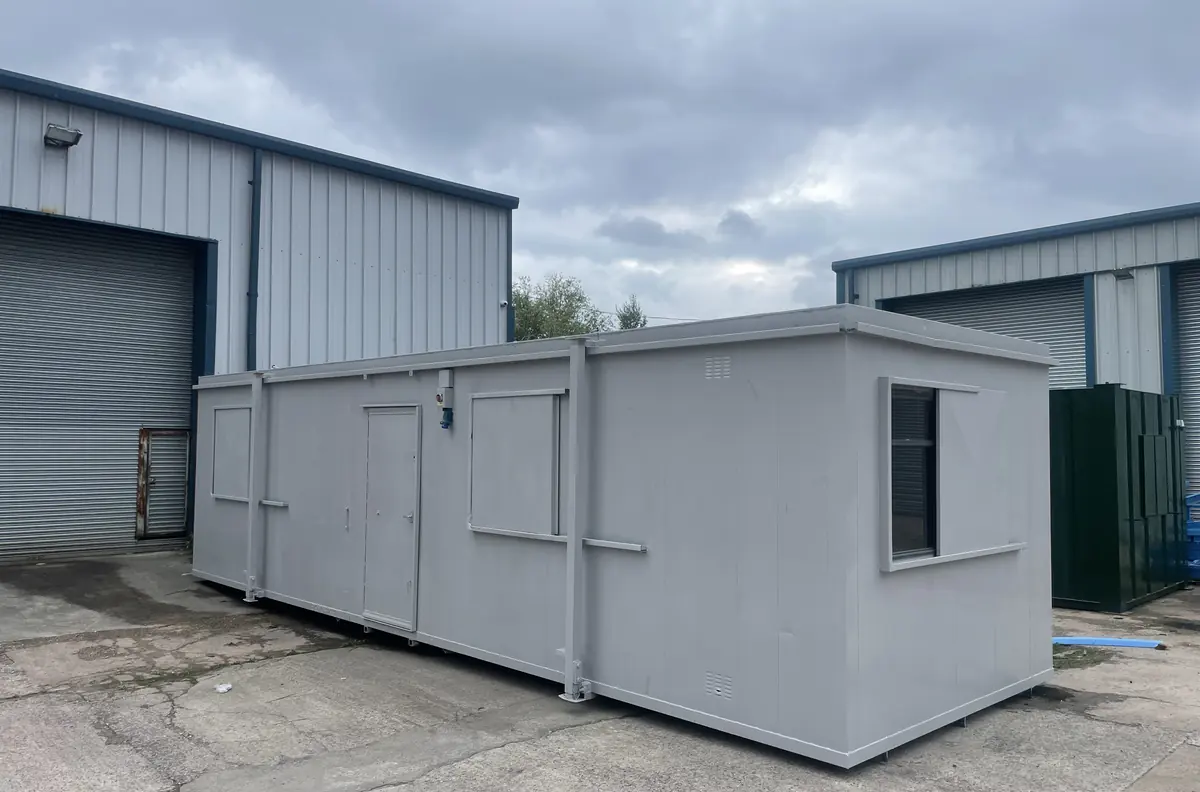
The factors
What moves the figure, and in which direction
Roughly in order of how much weight each one carries. Nothing here is a formula, but between them these eight things explain most of the difference between one offer and another.
| Factor | What we look at | Effect on the figure |
|---|---|---|
| Condition of roof, floor and frame | Standing water or patched felt on top, soft spots underfoot near the door, whether the unit is still square | The largest single influence. Sound in all three, and almost everything else is negotiable. Failing in any one, and the figure falls sharply |
| Whether it can be lifted | Corner eyes or castings intact, not cut off, not corroded through, base bearers sound | Pass or fail rather than a slider. No safe lift means no purchase at any figure |
| Size | Length and width, and whether the width makes it an abnormal load | Bigger units carry more value but cost more to move. Anything over ten feet wide brings transport complications that offset the gain |
| Specification | Insulation standard, heating, wiring and test paperwork, partitioning, steel shutters, kitchen or WC fit-out | Meaningful upward effect where the specification suits current demand. Certified, documented electrics are worth more than working electrics |
| Type of unit | Anti-vandal, jackleg, open-plan office, welfare, toilet block, container | Depends entirely on the market that week. Steel anti-vandal and welfare tend to be the steadiest sellers |
| Age | Build year where known, insulation and window standard as a proxy where not | Modest, and weaker than most sellers expect. A cared-for older unit beats a neglected newer one |
| Location and access | Postcode, distance from our routes, room to get a Hiab alongside, ground conditions, overhead obstructions | Affects the cost of collection, which comes out of the same calculation. Awkward access reduces what we can pay |
| Number of cabins | One on its own, a small batch, or a full fleet from a single location | Several from one place share the cost of the movement, which generally improves the figure for each |
| Current demand | What is selling from our yard, what is already committed, what is sitting | Real and changeable. The same cabin can be worth more in spring than in December, and we will not pretend otherwise |
Deliberately, there are no numbers in that table. Publishing a range would either flatter half the cabins we are sent or insult the other half, and either way it would set an expectation we then had to argue with.
Judging it yourself
Five minutes with the cabin will tell you most of it
Walk the inside barefoot of assumptions
Press the floor by the door and in each corner. Firm everywhere is a good sign and worth mentioning. Anything that gives underfoot is the thing that will move your figure most.
Look at the corners, not the paint
Corner posts and lifting eyes decide whether the unit can be collected. Rust bubbling at the base, a bent post or a missing eye matters more than the state of the cladding.
Stand back and check it is square
Sight along the roof line and down the long side. A unit that has racked or dropped a corner will show it from twenty feet away, and it is the sort of thing photographs taken close up hide completely.
Find the paperwork
Electrical test certificates, any service records, the original supplier if you know it. It will not transform the figure, but it removes doubt, and doubt always costs a seller something.
Stand where the lorry would
Can a vehicle get within crane reach on ground that will take it. Look up for cables and branches. This single question changes more quotes than most sellers realise.
Count what else is going
If there are two more units behind the shed you were planning to deal with later, include them now. Volume from one location works in your favour.
What happens next
From photographs to a figure
Send the pictures through the photo form with a postcode and a rough note on access. We look at them properly rather than running them past a formula, and you normally get an indication back the same working day.
An indication is exactly that. It is what we expect the unit to be worth on the strength of what we have been shown, and it stands provided the cabin on collection day is the cabin in the photographs. That condition is not a get-out clause; it is the reason we can commit to a figure without visiting first.
If the answer is that we do not want it, we will say so and tell you why. There is usually still a route to clearing it, which is covered on cabin disposal.
Read next
- Selling a single cabin — the process end to end, including payment on collection.
- Selling multiple cabins — batches, phasing and one settlement.
- What we buy and what we pass on — where the line sits and why.
- Selling containers — different unit, different questions.
- Hiab collection — what the lorry needs at your end.
Questions about valuing a cabin
Why will you not give me a figure over the phone?
Because any number given without seeing the unit would be a guess, and a guess that later moves is worse than no number at all. Two cabins of identical size and age can be worth very different amounts depending on the floor, the roof and whether they can be lifted. Photographs take five minutes and turn a guess into an answer.
How quickly do I get an indication once I send photographs?
Normally the same working day. If the pictures cover the outside, the inside, the roof and the corners, and we know the postcode and how a lorry would reach it, that is usually enough. Where something is unclear we will ring and ask rather than pad the figure to cover the uncertainty.
Does age matter much?
Less than people assume. A well-kept fifteen-year-old cabin that has been lifted carefully and kept dry beats a five-year-old unit that has sat in a wet field with a leaking roof. Age is a rough proxy for insulation standard and specification, which do matter, but condition is the stronger signal by a distance.
Does it help if I clean it or paint it first?
Cleaning it enough to photograph honestly helps. Painting it does not, and a fresh coat over rust tends to raise questions rather than value. What genuinely helps is clearing the area around it so the unit can be seen and a lorry could reach it, and finding any paperwork you have for the electrics.
Are several cabins worth more each than one?
Often, yes. The fixed costs of a job get shared across the units, so a lorry collecting four cabins from one yard is a more efficient movement than four separate trips. That efficiency is reflected in what we can pay. It is one of the few factors on this page that works in the seller favour purely through logistics.
Does where the cabin is affect the price?
It affects the cost of getting it, which is part of the same calculation. Distance from our routes, whether the site is easy to reach with a Hiab, ground conditions and any traffic restrictions all feed in. A straightforward lift off a hardstanding is a different job from a unit wedged behind a building on soft ground.
Find out what yours is actually worth
Photographs of the outside, the inside, the roof and the corners, plus a postcode. That is all it takes for a real figure rather than a range someone made up.