
Level, firm, drained
Ground preparation for a portable cabin comes down to three words, and everything else is detail. The unit needs to sit level, on something that will carry its weight without moving, with water running away from it rather than sitting under it. Get those three right and the cabin will still be shutting its doors properly in five years.
None of it is difficult. It just has to happen before the lorry arrives, not while it is standing there with the unit in the air, which is when most of these conversations actually take place.
Why level matters more than it sounds
A portable cabin is a box built to be square. Its doors and windows fit their openings because the frame holds its shape. Stand it on ground that is out of true and the frame does not stay square — it takes the shape of what is underneath it. Sometimes that happens straight away. More often it happens slowly, over a winter, as one corner sinks a little further than the others.
What you notice is not the frame. What you notice is the door starting to catch on the latch side, then needing a shoulder, then not closing at all in wet weather when everything swells. By the time somebody rings about the door, the unit has been twisting for months. You can pack a corner and get most of it back if you catch it early. Leave it a couple of years and the racking becomes permanent.
Windows tell you the same story slightly earlier. If a window that used to open freely starts binding at one corner, look at the ground before you look at the window.
What to stand it on
There is no single right answer, only what suits the ground you have and how long the unit is staying.
- Concrete. The best answer if the unit is staying for years, and the obvious one if a slab already exists. It spreads the load, it stays where it is, and it gives you a clean, drained surface to walk on around the door.
- Compacted hardcore. The usual site answer. Properly compacted, blinded and rolled, it carries a cabin perfectly well and it also carries the lorry, which matters more than people expect. Loose stone tipped in a heap is not the same thing.
- Railway sleepers. Cheap, quick, and effective at spreading load across soft ground. Lay them across the line of the chassis so the weight goes into more than one point. Check them at the end of the first winter to see whether either end has settled.
- Spreader pads or slabs at the corners. Fine for a jackleg cabin, where the legs land at the corners and the pads simply stop them sinking. Make sure they are big enough — a small pad on soft ground is just a smaller foot on the same problem.
Whichever you use, work out the bearing points first. A jackleg cabin lands on its legs. A steel unit tends to bear along its chassis rails. Putting support where the unit is not resting achieves nothing.
Drainage away, not under
Water is the thing that finishes cabins off, and most of the water that does the damage arrives from below rather than through the roof. A unit standing in a hollow that collects run-off has damp working at the underside of the floor all year, and there is nothing you can do about it from inside.
Two habits are worth building. First, look at the ground when it is raining, not when it is dry — the fall is obvious in wet weather and invisible in July. Second, set the pad slightly proud of the surrounding ground so water runs away from the unit. A cabin stood in a shallow dish is a cabin with a soft floor by the door in two years.
Do not park it under the drip line of a tree if you can help it, and think about where the roof water goes. A flat roof that sheds off one edge onto the ground beside the door will make a puddle exactly where everybody walks in with muddy boots.
Where to put it so the lorry can get to it
This is the part that gets left out. The pad can be perfect and the delivery can still fail because nothing can reach it.
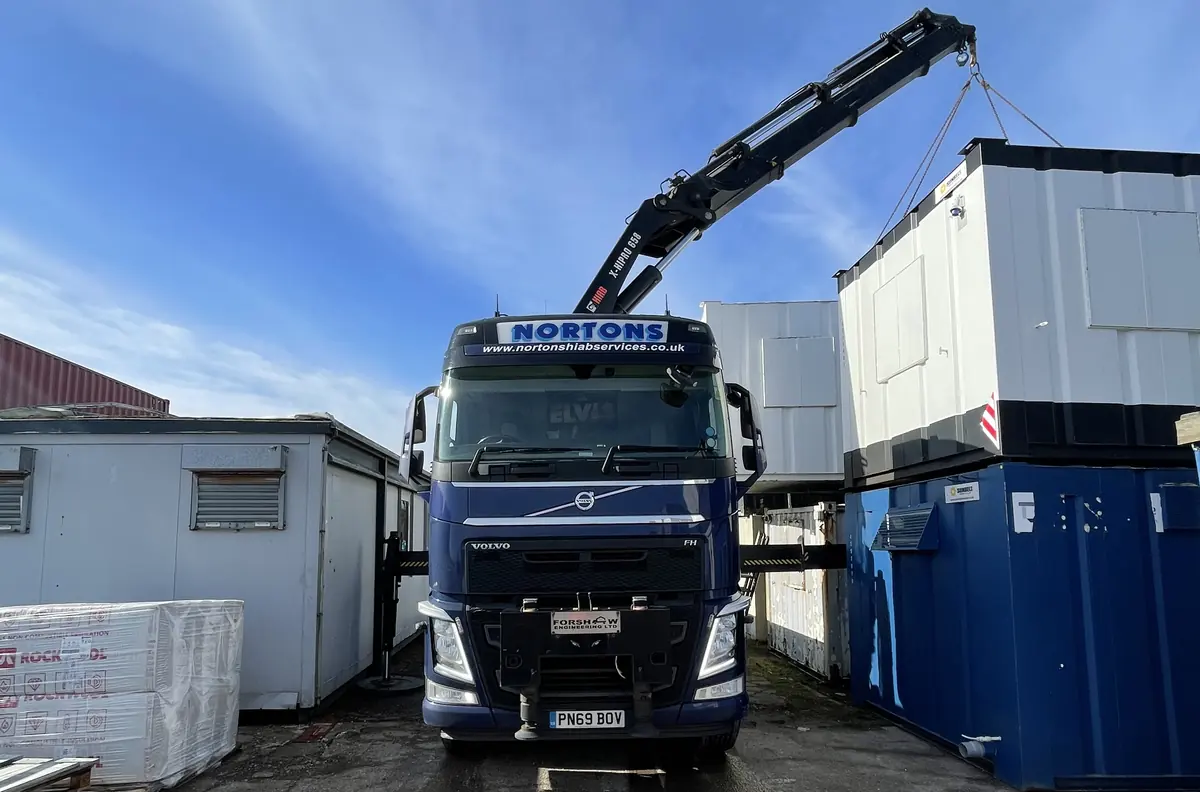
The crane on the lorry can only lift what it can lift at that distance, and its capacity falls away as the boom extends. So a standing position ten metres beyond where the lorry can park is a materially different job from one the lorry can park alongside — and sometimes it is not possible at all. Work out where a lorry can realistically stand before you decide where the cabin goes, and check what is above that route as well as on it. Cables and branches stop more lifts than gates do.
Also think about the future. If the unit is coming out again in eighteen months, do not build the compound around it. We are asked fairly regularly to collect cabins that have been boxed in by later building work, and the honest answer is sometimes that there is no route out. Leave yourself a lane.
A short checklist for the day before
- Pad level, checked across both diagonals, not just along one side.
- Bearing points supported, not just the middle.
- Ground firm enough for the lorry as well as the cabin, including where the outriggers will land.
- Water running away from the pad.
- Nothing parked on the access route and nothing overhead.
- Somebody on site who can say where the unit goes and which way round the door faces.
That last one causes more standing about than anything else on the list. Decide which way the door faces before the lift, because turning a cabin once it is down is another lift.
Getting a unit onto your pad
If the base is sorted and you need the cabin, our used portable cabins for sale is the place to start, and the Hiab collection and lifting page explains what the lorry can and cannot do once it arrives. If the ground is the bit you are unsure about, describe it to us — surface, fall, what the lorry would be driving on — and we will tell you straight whether it will work.
Photographs from the gate looking towards the standing position are worth more than any description. Send them through the quote form, or ring 0330 175 6831 between 6am and 6pm on a weekday. The FAQ covers the questions that come up most often around siting and delivery.